Emergency Lighting: An Essential Component of Fire Safety
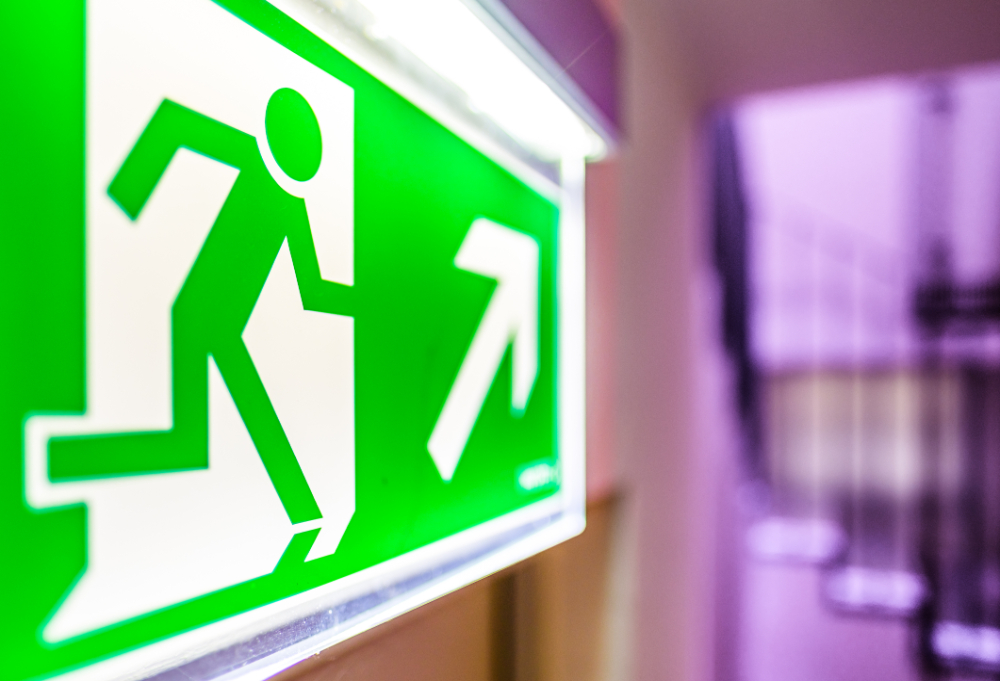
When a fire breaks out or a power outage strikes, the difference between a safe evacuation and a tragic outcome often comes down to one critical factor: can people see where they are going? Emergency lighting systems are the unsung heroes of building safety, quietly standing by until the moment they are needed most. Whether you are a building owner, a facility manager, or simply someone who spends time in commercial or public spaces, understanding the role of emergency lighting is essential to appreciating how modern fire safety works.
Buildings are designed with multiple layers of protection, and emergency lighting is woven into nearly every one of them. From hospitals and schools to office towers and retail centers, these systems provide the illumination that guides occupants to safety when normal power fails. The stakes could not be higher, and the standards that govern these systems exist for very good reason.
How Emergency Lighting Systems Work
At their core, emergency lighting systems are designed to activate automatically when the primary power supply is interrupted. Most systems rely on one of two configurations: centralized battery backup connected to the building’s electrical infrastructure, or self-contained units with individual batteries built directly into each fixture.
Self-contained units are among the most common in smaller commercial buildings. Each fixture monitors the incoming voltage, and when that voltage drops below a certain threshold, the internal battery takes over and the light activates within seconds. Centralized systems, more common in larger facilities, rely on a single battery bank or generator that powers multiple fixtures simultaneously. Both approaches serve the same fundamental purpose: keeping the lights on when the grid cannot.
Modern emergency lighting systems also incorporate self-testing technology. Rather than relying solely on manual inspections, these smart fixtures run automated diagnostic cycles, checking battery charge levels and bulb functionality on a regular schedule. Facilities managers can access test logs and receive alerts when a unit fails or requires maintenance. This advancement has significantly improved the reliability of emergency lighting across a wide range of building types.
The light source technology has also evolved considerably. While older systems used incandescent or fluorescent bulbs, the industry has largely shifted to LED-based emergency lighting. LEDs consume far less power, which means batteries last longer during an actual emergency. They also have longer operational lifespans, reducing replacement costs and maintenance frequency over time.
The Role of Exit Illumination in Evacuation Planning
Exit illumination is not simply about placing a glowing sign above a door. It is a carefully planned network of visual cues that guides people through a building under stress, in unfamiliar surroundings, and often through smoke-filled corridors. The human brain processes visual information differently under panic, and evacuation design accounts for this by creating a continuous, intuitive path of light from any point in a building to a safe exit.
Strategically placed exit signs, pathway lighting along floors and walls, and illuminated stairwells all work together as a unified system. Low-mounted lighting is particularly effective in smoky conditions, because smoke tends to rise and accumulate near the ceiling first. By placing guide lights closer to the floor, occupants who may be crouching or crawling to avoid smoke inhalation can still follow the evacuation path.
Exit illumination must also account for the psychology of crowd behavior. In an emergency, people tend to move toward familiar exits, which may not always be the safest or most efficient route. Properly designed and well-lit emergency egress systems can redirect foot traffic toward less congested exits, potentially preventing bottlenecks and reducing injury risk.
Building architects and fire safety engineers work closely to integrate exit illumination into the overall design of a space. This is not an afterthought but a foundational element of any compliant building plan. The placement of each fixture, the brightness levels required at various points along the egress path, and the duration for which the system must operate are all specified in advance and verified during inspections.
Understanding Lighting Safety Standards
Compliance with lighting safety standards is not optional. In the United States, the primary frameworks governing emergency and exit lighting come from the National Fire Protection Association, specifically NFPA 101, known as the Life Safety Code, and NFPA 70, the National Electrical Code. These documents establish the minimum requirements for system performance, installation, testing, and maintenance.
NFPA 101 requires that emergency lighting systems provide a minimum of 1.5 hours of illumination following a power failure. The standard also specifies minimum illumination levels along the egress path, ensuring that the lighting is bright enough to be functional but distributed in a way that avoids harsh contrasts between lit and unlit areas. High contrast can cause temporary visual impairment and slow evacuation.
For exit signs specifically, lighting safety standards require that they remain legible and illuminated at all times, not just during emergencies. This ensures familiarity; occupants who see exit signs daily are more likely to locate them quickly under stress. Signs must meet specific brightness and contrast requirements, and they must be visible from a designated distance.
The International Building Code (IBC) and local amendments add another layer of regulation that varies by jurisdiction. In California, for example, the California Building Code incorporates Title 24 energy efficiency requirements that interact directly with emergency lighting specifications. Building owners must navigate both fire safety mandates and energy compliance standards simultaneously, which is why working with a qualified fire protection engineer is strongly recommended during new construction or major renovation projects.
Inspections are a critical part of maintaining compliance. Authorities Having Jurisdiction (AHJ), typically local fire marshals or building departments, conduct periodic reviews to verify that emergency lighting systems are functioning as required. Failure to maintain compliance can result in fines, occupancy restrictions, or forced closures.
Maintenance, Testing, and Long-Term Reliability
Even the best-designed emergency lighting systems will fail if they are not properly maintained. Batteries degrade over time, bulbs burn out, and fixtures can be damaged during routine building operations. A comprehensive maintenance program is the foundation of any reliable emergency lighting strategy.
Monthly functional tests are a standard requirement under most lighting safety standards. During these tests, the power supply to the fixture is interrupted for a brief period, typically 30 seconds, to verify that the backup system activates and produces adequate light. Annual tests require the system to operate for the full 90-minute duration specified by NFPA 101, confirming that battery capacity has not degraded to the point of non-compliance.
Documentation matters enormously in this context. Building owners and facility managers should maintain detailed logs of every test, every repair, and every replacement. In the event of an emergency or an inspection, this documentation demonstrates due diligence and provides a clear record of system performance over time.
Newer buildings are increasingly being outfitted with addressable emergency lighting systems that integrate with broader building management platforms. These systems provide real-time data on fixture status, battery health, and test results, feeding information into a centralized dashboard that facility teams can monitor remotely. This level of visibility was once reserved for the largest commercial properties but is now accessible across a broader range of building types thanks to falling hardware costs and advances in wireless technology.
Training building staff on the basics of emergency lighting systems is also an underappreciated component of long-term reliability. Maintenance personnel who understand how to identify a failing fixture, how to read a test log, and when to escalate an issue to a licensed contractor can catch problems before they become compliance violations or, worse, failures during an actual emergency.
Conclusion
Emergency lighting systems represent one of the most fundamental investments a building owner can make in the safety of everyone who walks through their doors. Through a combination of smart design, rigorous adherence to lighting safety standards, and consistent maintenance, these systems ensure that exit illumination remains available precisely when it matters most. Fire safety is never the product of a single measure; it is the result of many overlapping systems working together. Emergency lighting is one piece of that puzzle, but it is an indispensable one.
Need Life Safety Products Near You?
There are various forms of personal protection. We offer fire safety and fire prevention equipment including fire extinguishers, and we service them, too. Business owners throughout Southwest Kansas should know what types of personal protection or fire safety equipment is necessary to suit the needs of their business. Rather than struggling with purchasing decisions, discuss with our consultants from C.F. Fire & Life Safety and let us guide you through the logistics. Based in Liberal, KS, C.F. Fire & Life Safety, is your destination for personal protection, fire safety, fire prevention, and fire extinguisher services throughout Southwest Kansas. Contact us today to learn more about what we can do for you!