Navigating Fire Safety Regulations for New Business Owners
Starting a business comes with an exciting mix of opportunity and responsibility. Among the many obligations new entrepreneurs face, fire safety compliance is one of the most critical yet frequently overlooked areas. Understanding the regulations for startups that govern workplace safety can mean the difference between a thriving business and one that faces costly fines, shutdowns, or worse. Whether you are opening a retail shop, a restaurant, an office, or a warehouse, fire safety laws apply to you, and getting up to speed early will save you significant headaches down the road.
Fire codes are not arbitrary bureaucratic hurdles. They exist because fires in commercial settings cause thousands of injuries, deaths, and billions of dollars in property damage each year in the United States alone. As a new business owner, taking the time to understand these rules protects your employees, your customers, your assets, and your future.
Understanding the Foundation of Fire Safety Law
Fire safety in the United States is governed by a layered system of federal, state, and local regulations. At the federal level, the Occupational Safety and Health Administration (OSHA) sets baseline business safety laws that apply to most employers across the country. OSHA standards cover everything from the placement of fire extinguishers to the maintenance of emergency exit routes. Violating OSHA fire standards can result in serious financial penalties, especially if an inspection reveals willful neglect.
Beyond OSHA, the National Fire Protection Association (NFPA) publishes a set of widely adopted codes, most notably NFPA 1 (the Fire Code) and NFPA 101 (the Life Safety Code). While the NFPA itself does not enforce these codes, most states and municipalities adopt them into local law, making them legally binding in your area. Your local fire marshal’s office is the primary authority that inspects your business for compliance and issues occupancy permits.
It is important to understand that fire regulations are not one-size-fits-all. A small accounting office faces different requirements than a restaurant kitchen or a manufacturing facility. The type of business you operate, the materials you store or use, the number of employees, and the age and construction type of your building all factor into which specific codes apply to you. This is why consulting with a licensed fire protection engineer or your local fire marshal early in the setup process is a smart investment for any startup.
Building Your Compliance Checklist
Creating a thorough compliance checklist is one of the most practical steps a new business owner can take. A well-organized checklist ensures that nothing falls through the cracks and gives you a clear record of your safety measures if you are ever audited or inspected.
Your compliance checklist should begin with the basics. First, confirm that your building has a valid Certificate of Occupancy and that any planned renovations or changes to the space have been reviewed and approved by the local building and fire departments. Changes to walls, ceilings, or layouts can affect sprinkler coverage, egress paths, and ventilation, all of which have fire safety implications.
Next, assess your fire suppression and detection systems. Most commercial buildings are required to have functioning smoke detectors, carbon monoxide detectors where applicable, and fire sprinkler systems depending on the size and use of the space. Make sure all systems have been inspected recently and that inspection tags are current. These systems need annual or semi-annual professional servicing in most jurisdictions.
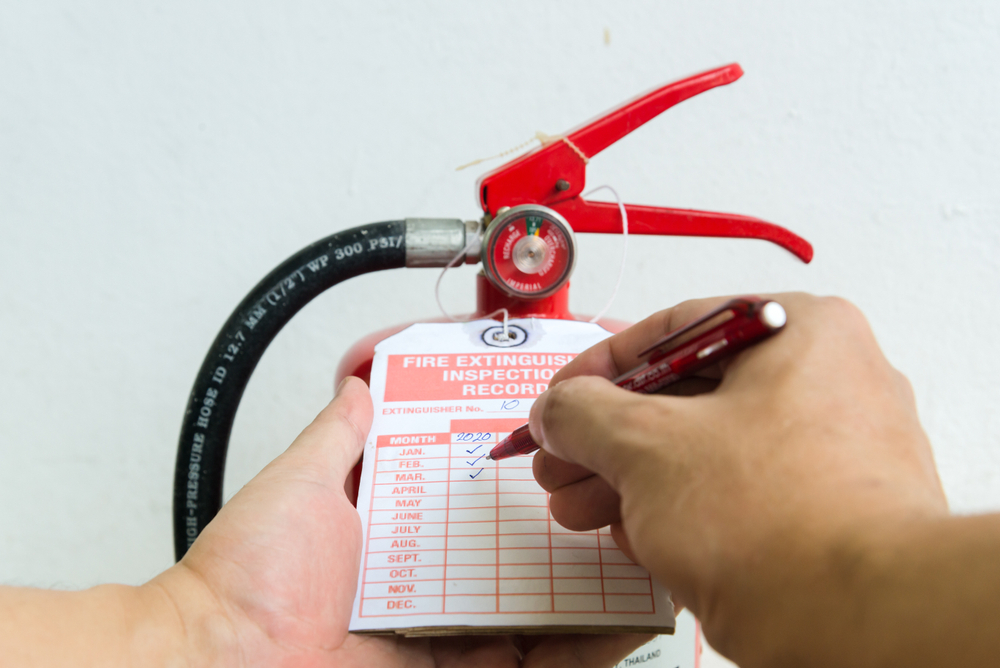
Your compliance checklist should also address fire extinguishers. OSHA requires that portable fire extinguishers be provided in most workplaces and that they be inspected monthly by a designated employee and serviced annually by a licensed professional. The type of extinguisher (Class A, B, C, D, or K) matters too, and must match the potential fire hazards present in your specific work environment.
Emergency exit routes deserve careful attention as part of your business safety laws review. Every workplace must have clearly marked, unobstructed exit routes that lead directly to the outside. Exit signs must be illuminated and visible. The path to every exit must remain clear at all times, meaning no storage, equipment, or debris can block hallways, stairwells, or exit doors. Exit doors must open from the inside without special knowledge or tools during an emergency.
Training Your Team and Maintaining a Safety Culture
Compliance is not just about equipment and paperwork. It is about people. One of the most important regulations for startups involves employee fire safety training. OSHA requires that employees be trained to understand the fire hazards present in their workplace and know how to respond in an emergency. This training must occur at the time of initial employment and whenever new fire hazards are introduced.
Your team should know the location of all fire extinguishers, how to use them using the PASS technique (Pull, Aim, Squeeze, Sweep), and when it is appropriate to attempt to fight a small fire versus when to evacuate immediately. Every employee should also know the evacuation plan for your building, including primary and secondary exit routes and the designated outdoor meeting point where headcounts are taken.
Fire drills are strongly encouraged and, in many jurisdictions, required for certain types of businesses. Conducting drills at least once a year helps employees respond calmly and efficiently if a real emergency occurs. Document each drill, noting the date, the number of participants, and the time it took to fully evacuate. This documentation can be valuable during inspections.
Beyond drills, cultivating an ongoing culture of safety awareness pays long-term dividends. Encourage employees to report potential hazards such as frayed electrical cords, blocked exits, or malfunctioning detectors. Post emergency contact numbers and evacuation maps in visible locations throughout the workplace. Assign a fire safety officer or coordinator if your team size warrants it. When safety is treated as everyone’s responsibility, compliance becomes a natural part of daily operations rather than a reluctant obligation.
Staying Current as Regulations Evolve
Fire safety regulations are not static. They evolve as new research emerges, as building materials and technologies change, and as lessons are learned from real-world fire incidents. New business owners who treat compliance as a one-time task rather than an ongoing commitment often find themselves out of step with current requirements.
One of the best ways to stay current is to maintain a relationship with your local fire marshal’s office. Many local fire departments offer free or low-cost consultations for new businesses, and some even provide educational workshops on fire safety and compliance. Attending these sessions keeps you informed about local amendments to state and national codes that could affect your business.
Subscribe to updates from OSHA and the NFPA if your business involves any significant fire hazards. Industry associations in sectors like food service, manufacturing, healthcare, and retail often publish guidance on regulatory changes that affect their members. If your business grows, expands to new locations, or changes its operations significantly, treat those milestones as triggers to re-examine your compliance posture from the ground up.
Working with a professional fire safety consultant on an annual basis is also a worthwhile investment, particularly for businesses in high-risk industries. These specialists can identify gaps that an untrained eye might miss and help you implement solutions before a violation occurs.
Conclusion
Navigating fire safety regulations as a new business owner requires attention, planning, and consistency. By understanding the business safety laws that apply to your specific situation, building and maintaining a solid compliance checklist, training your team thoroughly, and committing to staying current as rules change, you position your business for long-term success. Fire safety is not just a legal obligation; it is a reflection of the care you extend to every person who walks through your doors.
Need Life Safety Products Near You?
There are various forms of personal protection. We offer fire safety and fire prevention equipment including fire extinguishers, and we service them, too. Business owners throughout Southwest Kansas should know what types of personal protection or fire safety equipment is necessary to suit the needs of their business. Rather than struggling with purchasing decisions, discuss with our consultants from C.F. Fire & Life Safety and let us guide you through the logistics. Based in Liberal, KS, C.F. Fire & Life Safety, is your destination for personal protection, fire safety, fire prevention, and fire extinguisher services throughout Southwest Kansas. Contact us today to learn more about what we can do for you!