Fire safety is one of the most critical responsibilities for any business owner or facilities manager. Commercial buildings present unique challenges when it comes to fire prevention and emergency response. With dozens or even hundreds of occupants, complex electrical systems, and valuable assets on the line, having a comprehensive approach to commercial fire safety is not just a legal obligation; it is a moral one.
Understanding the risks and taking deliberate, proactive steps can mean the difference between a minor incident and a catastrophic loss.
Common Office Fire Hazards
Before you can protect a building, you need to understand what puts it at risk. Office fire hazards are more common than most people realize, and many of them are hiding in plain sight. Overloaded power strips, frayed electrical cords, and improperly stored flammable materials are among the leading causes of workplace fires. Kitchens and break rooms are particularly vulnerable spaces, where unattended cooking equipment can ignite quickly. Server rooms and data centers generate significant heat and can become fire risks if ventilation and cooling systems are not properly maintained.
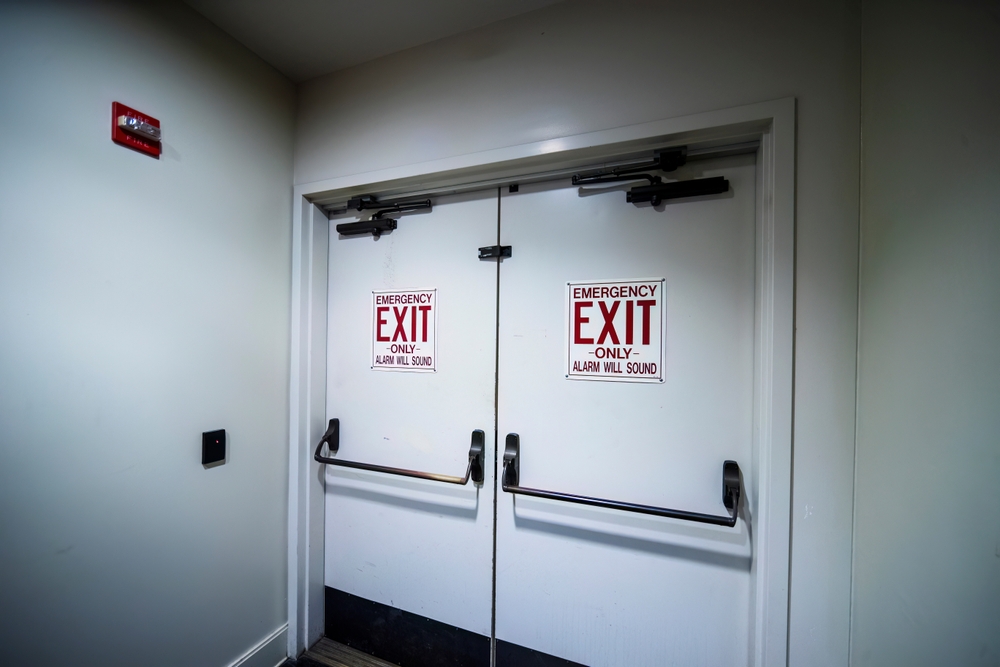
Clutter is another underappreciated hazard. When hallways, stairwells, and storage areas are packed with boxes, furniture, or other materials, they do not just obstruct emergency exits; they also provide additional fuel for a fire that might otherwise remain contained. Electrical panels that are blocked or inaccessible present a serious risk as well, since firefighters and building engineers need quick access to shut off power in an emergency.
Human behavior plays a role too. Improper disposal of smoking materials near building entrances, use of unauthorized space heaters, and leaving coffee makers or other appliances running overnight are all behaviors that contribute to preventable fires. Education and awareness are the first line of defense against these everyday risks.
Essential Fire Prevention Strategies Every Business Should Implement
Putting solid fire prevention strategies in place requires a layered approach that combines physical infrastructure, employee training, and ongoing maintenance. No single measure is sufficient on its own; instead, businesses must think in terms of systems that reinforce one another.
The foundation of any fire prevention plan is a thorough risk assessment. This involves walking through the building with a trained eye to identify potential ignition sources, fuel loads, and areas where fire could spread rapidly. Risk assessments should be conducted at least annually and updated whenever significant changes are made to the building layout, occupancy, or operations.
Proper storage of flammable and combustible materials is another cornerstone of fire prevention. Chemicals, paper goods, cleaning supplies, and other combustibles should be stored in designated areas with appropriate containment and ventilation. Quantities of flammable liquids should be kept to the minimum necessary for daily operations, with the remainder stored in compliant safety cabinets or off-site locations.
Electrical safety deserves particular attention in commercial settings. Routine inspections by licensed electricians can catch problems before they escalate. Businesses should ensure that all wiring meets current code requirements, that circuit breakers are properly sized, and that extension cords are used only as temporary measures rather than permanent fixtures. Any signs of electrical trouble, such as flickering lights, tripped breakers, or burning smells, should be investigated immediately by a qualified professional.
Installing and Maintaining Fire Safety Systems
No discussion of commercial fire safety is complete without addressing the critical role of fire detection and suppression systems. These systems are the last line of defense when prevention measures fall short, and their reliability can literally save lives.
Sprinkler systems are widely recognized as one of the most effective tools for controlling commercial building fires. When properly designed and maintained, automatic sprinklers can suppress or extinguish a fire before it spreads beyond the room of origin, buying precious time for occupants to evacuate and for emergency responders to arrive. Buildings that rely on older systems should have them inspected regularly to ensure nozzles are not corroded, pipes are free of obstructions, and water pressure meets required levels.
Smoke and heat detectors form the early warning network that triggers evacuation and alerts the fire department. These devices should be installed in every room and corridor, tested monthly, and replaced according to the manufacturer’s recommended schedule. Interconnected detectors that sound simultaneously throughout the building are far more effective than isolated units that only alarm in the room where smoke is detected.
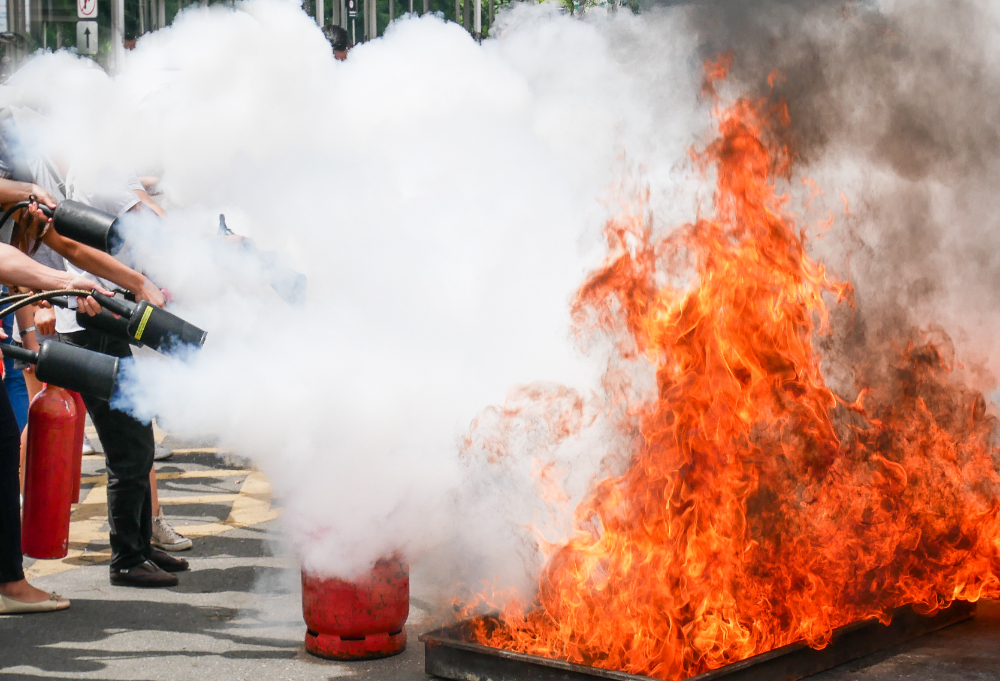
Fire extinguishers must be present on every floor, properly mounted, clearly labeled, and inspected annually. Employees should be trained on how to use them effectively using the PASS technique: Pull, Aim, Squeeze, and Sweep. However, extinguishers are intended only for small, contained fires; if a fire grows beyond a wastebasket size, evacuation is the correct response.
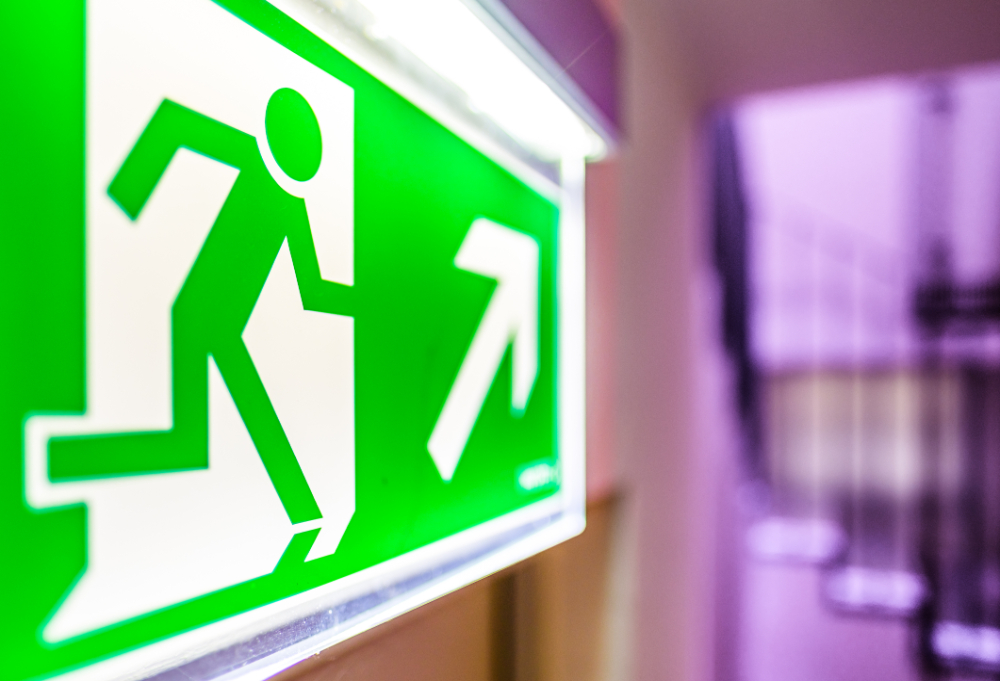
Emergency lighting and illuminated exit signs are often overlooked until they are desperately needed. These systems should be tested regularly to confirm they activate during power outages and guide occupants safely to exits.
Creating and Practicing a Fire Emergency Plan
Even the best fire prevention strategies and detection systems are only as good as the people who rely on them. A well-designed fire emergency plan transforms a chaotic situation into an organized response, reducing the risk of injuries and ensuring that everyone knows exactly what to do when an alarm sounds.
Every commercial building should have a written emergency action plan that outlines evacuation routes, designated assembly points, responsibilities for specific staff members, and procedures for assisting individuals with disabilities or mobility limitations. This plan should be posted prominently throughout the building and made available to all employees.
Designated fire wardens play a vital role in commercial settings. These individuals are responsible for sweeping their assigned areas, confirming that all occupants have evacuated, and reporting to the incident commander at the assembly point. Wardens should receive specialized training and clear instructions on when to assist others versus when to prioritize their own safe exit.
Fire drills are non-negotiable. Many businesses treat them as a formality or an inconvenience, but regular drills are the only way to ensure that occupants can evacuate quickly and calmly under stress. Drills should be conducted at least twice a year, at varying times of day, and should be followed by a debrief to identify any gaps in the plan or areas where the evacuation took longer than expected.
Coordination with your local fire department adds another layer of preparedness. Inviting fire officials to tour the building allows them to familiarize themselves with the layout, identify potential challenges, and provide site-specific recommendations. This relationship can make a meaningful difference in the speed and effectiveness of their response during an actual emergency.
Compliance, Training, and Ongoing Vigilance
Maintaining compliance with local fire codes and National Fire Protection Association (NFPA) standards is a continuous responsibility, not a one-time checkbox. Regulations evolve, buildings change, and occupancy levels shift over time; staying current requires consistent effort and documentation.
Businesses should designate a fire safety officer or work with a third-party consultant to keep track of inspection schedules, permit renewals, and code updates. Records of all fire safety activities, including inspections, drills, training sessions, and equipment maintenance, should be carefully documented and stored in an accessible location.
Employee training must go beyond the bare minimum required by law. Workers who understand why fire safety protocols exist are far more likely to follow them consistently. Training should cover how to recognize and report hazards, how to respond to an alarm, and how to use fire extinguishers appropriately. New hires should receive this training during onboarding, with refreshers provided at least annually.
Conclusion
A strong commitment to commercial fire safety protects people, property, and the future of your business. By identifying office fire hazards, implementing proven fire prevention strategies, maintaining detection and suppression systems, and preparing every occupant with a clear emergency plan, businesses can dramatically reduce their risk. Fire safety is not a project with a finish line; it is an ongoing culture that requires leadership, consistency, and attention every single day.
Need Life Safety Products Near You?
There are various forms of personal protection. We offer fire safety and fire prevention equipment including fire extinguishers, and we service them, too. Business owners throughout Southwest Kansas should know what types of personal protection or fire safety equipment is necessary to suit the needs of their business. Rather than struggling with purchasing decisions, discuss with our consultants from C.F. Fire & Life Safety and let us guide you through the logistics. Based in Liberal, KS, C.F. Fire & Life Safety, is your destination for personal protection, fire safety, fire prevention, and fire extinguisher services throughout Southwest Kansas. Contact us today to learn more about what we can do for you!
Fire safety is one of the most critical responsibilities a business owner or manager can take on. Yet, despite the obvious importance of emergency preparedness plans, many organizations treat fire drills as a box-checking exercise rather than a genuine life-saving practice. When a real emergency strikes, the difference between a calm, organized evacuation and a chaotic scramble often comes down to how well a workplace has prepared. Learning how to conduct workplace drills effectively is not just a regulatory requirement in most jurisdictions; it is a moral obligation to every person who walks through your doors.
This guide walks you through the entire process of planning and executing a fire drill at your workplace, from the initial stages of fire drill planning all the way through the post-drill evaluation. Whether you manage a small office, a large warehouse, or a multi-story building, these principles apply across the board.
Understanding the Purpose of a Fire Drill
Before diving into logistics, it helps to understand what a fire drill is actually meant to accomplish. A fire drill is a structured simulation of an emergency evacuation designed to test your organization’s emergency preparedness plans and ensure that every employee knows exactly what to do when an alarm sounds.
The goals are straightforward. You want employees to know their evacuation routes. You want to identify bottlenecks, blocked exits, or confusion points in your building layout. You want to verify that designated roles, such as fire wardens or floor monitors, are being carried out properly. And you want to build the kind of muscle memory that kicks in during high-stress situations when rational thinking can temporarily break down.
Research consistently shows that people who have practiced an evacuation respond significantly faster and more effectively than those who have not. A drill that feels routine or even slightly inconvenient is doing exactly what it is supposed to do: preparing people for a moment when inconvenience becomes a matter of survival.
Fire Drill Planning: What to Do Before the Drill
Effective fire drill planning begins weeks, not days, before the actual event. Rushing the preparation process is one of the most common mistakes organizations make, and it often leads to drills that are chaotic, incomplete, or fail to surface real problems.
Start by reviewing your current emergency preparedness plans. These documents should outline your evacuation routes, identify assembly points, assign roles to specific staff members, and account for employees who may need assistance evacuating, such as those with mobility limitations. If your emergency plan has not been updated recently, now is the time to revise it before you test it.
Next, walk through the building yourself. Look at every exit and stairwell. Are they clearly marked? Are they free from obstruction? Test the fire alarm system to confirm it is functioning properly in all areas of the building, including break rooms, restrooms, and any remote corners of the facility. Coordinate with your building manager or facilities team if any repairs or updates are needed.
Assign fire wardens or floor monitors for each section of the building. These individuals are responsible for sweeping their areas to ensure everyone has evacuated, guiding people to the correct exits, and reporting the status of their zones to the incident commander, typically a safety officer or manager, at the assembly point.
Decide whether your drill will be announced or unannounced. Both approaches have merit. Announced drills allow employees to mentally prepare and reduce the risk of injuries from panic, making them a good starting point for organizations running their first drill. Unannounced drills, on the other hand, more closely simulate a real emergency and reveal gaps that a prepared drill might not. Many safety professionals recommend starting with announced drills and transitioning to unannounced ones as your team becomes more experienced.
Finally, set a date and time, and notify the appropriate parties. If your building houses multiple tenants or businesses, coordinate with them. Inform local fire departments in advance; in many areas, this is legally required, and fire officials may even want to observe or participate.
Conducting the Drill: Step-by-Step Execution
On the day of the drill, your role is to observe, not to participate as an evacuee. Position observers at key locations throughout the building so you can collect data on how the evacuation unfolds in real time.
Trigger the alarm at the designated time. From this moment, your observers should be tracking how quickly people begin to move, whether they use the correct exits, whether anyone hesitates or appears confused, and how long it takes to fully clear each floor or section.
Fire wardens should be actively doing their jobs: doing a final sweep of restrooms, conference rooms, and other spaces where someone might be isolated, then reporting to the assembly point. At the assembly point, the incident commander should be conducting a headcount and accounting for all employees, including those who may be working remotely or out of the office that day.
Time the entire process from the moment the alarm sounds to the moment all personnel are accounted for at the assembly point. This number becomes your baseline for future drills.
Pay particular attention to employees who require evacuation assistance. Pre-planned procedures for these individuals should be tested just as rigorously as general evacuation routes. Many buildings designate areas of refuge where individuals who cannot use the stairs wait for emergency responders; make sure these locations are known and accessible.
Once everyone is outside and accounted for, give a brief all-clear signal and allow employees to return to the building in an orderly manner. This is also a good time to share immediate impressions with staff while the experience is fresh.
Post-Drill Evaluation and Follow-Up
Conducting the drill itself is only half the work. The post-drill evaluation is where the real value of your fire drill planning comes through. Without a thorough debrief, you miss the entire point of the exercise.
Gather your observers and fire wardens as soon as possible after the drill. Collect their notes and compile a written report that documents the total evacuation time, any problems encountered, how well roles were carried out, and the overall performance of your emergency preparedness plans. Were there exits that people avoided? Did any employees not know where to go? Did the assembly area create congestion?
Share the findings with your team. Transparency is important here. If the drill revealed weaknesses, employees should know about them so they understand why changes are being made. Celebrate what went well, too; positive reinforcement encourages people to take future drills seriously.
Update your emergency preparedness plans based on what you learned. This might mean repositioning your assembly area, retraining certain staff members, adding clearer exit signage, or revising the roles assigned to fire wardens. Every drill should result in at least one meaningful improvement.
Schedule your next drill. Most safety regulations require workplaces to conduct fire drills at least once per year, though high-risk environments like healthcare facilities, schools, and manufacturing plants often require more frequent practice. Use the interval between drills to keep your team refreshed on procedures, especially when you onboard new employees or make significant changes to your building layout.
Conclusion
Learning how to conduct workplace drills effectively is one of the most valuable investments a business can make in the safety and well-being of its people. Through careful fire drill planning, consistent execution, and honest post-drill evaluation, you turn a routine compliance activity into a genuine life-safety program. Strong emergency preparedness plans are not static documents; they are living frameworks that improve with every drill you run. Start today, and build a culture where safety is taken seriously long before any alarm ever sounds.
Need Life Safety Products Near You?
There are various forms of personal protection. We offer fire safety and fire prevention equipment including fire extinguishers, and we service them, too. Business owners throughout Southwest Kansas should know what types of personal protection or fire safety equipment is necessary to suit the needs of their business. Rather than struggling with purchasing decisions, discuss with our consultants from C.F. Fire & Life Safety and let us guide you through the logistics. Based in Liberal, KS, C.F. Fire & Life Safety, is your destination for personal protection, fire safety, fire prevention, and fire extinguisher services throughout Southwest Kansas. Contact us today to learn more about what we can do for you!
If you have ever looked at your homeowner’s or business insurance bill and wondered why your neighbor pays less than you do, the answer might be sitting right in your attic, mounted on your ceiling, or connected to your water supply. Fire safety measures play a significant role in how insurers calculate risk, and understanding this relationship can help you make smarter decisions as a policyholder. The connection between insurance premiums and safety is not just a talking point from your agent; it is a fundamental part of how the entire underwriting process works.
Insurers are in the business of predicting and pricing risk. When they assess a property, they are essentially asking one question: how likely is this property to generate a claim, and how expensive will that claim be? Fire is one of the most costly and unpredictable perils in the insurance world, which is why fire protection savings are built into the pricing models of virtually every major carrier. Understanding how this process works puts you in a better position to take action and potentially reduce what you pay every year.
How Insurers Assess Fire Risk
Before an insurer ever quotes you a premium, they gather a tremendous amount of information about your property and its surroundings. For homeowners, this typically includes the age of the home, the type of construction materials used, the condition of electrical systems, and the proximity of the property to a fire station or hydrant.
That last factor, proximity to fire protection, carries more weight than most policyholders realize. Insurance companies use a grading system developed by the Insurance Services Office (ISO) called the Public Protection Classification (PPC). This system grades communities on a scale from 1 to 10 based on the quality of their local fire departments, water supply infrastructure, and emergency communications. A community rated 1 has the best fire protection; a community rated 10 has essentially none.
If your home or business sits in a community with a low PPC rating, you are likely paying more for coverage than someone in a well-protected area. This is not arbitrary. Statistically, properties in areas with faster fire response times and better-equipped departments suffer less total damage when fires occur. The insurer’s pricing simply reflects that reality.
Beyond community-level ratings, insurers also look at the individual property. Do you have a sprinkler system? Are smoke detectors present and properly maintained? Is there a monitored alarm system in place? Each of these factors contributes to how your personal risk profile is constructed. The more layers of protection you have, the more attractive your property looks to an underwriter.
The Direct Impact of Fire Safety Features on Your Premium
Here is where things get practical. Installing and maintaining fire safety systems can translate directly into lower insurance premiums and safety improvements on your property. Many insurers offer explicit discounts for specific features, and some of these discounts are more generous than people expect.
Sprinkler systems are among the most impactful upgrades you can make. Residential fire sprinklers can reduce the risk of death in a home fire by more than 80 percent according to the National Fire Protection Association, and they significantly limit property damage by containing fires before they spread. Insurers recognize this and often provide premium discounts ranging from 5 to 15 percent, sometimes more, for properties equipped with functioning sprinkler systems.
Monitored smoke and fire alarm systems are another strong factor. A basic battery-operated smoke detector is better than nothing, but a professionally monitored alarm system that alerts a central station and dispatches emergency services automatically is a different category of protection entirely. Insurers treat these systems differently in their pricing, and making the upgrade can yield meaningful discounts.
Hardwired interconnected smoke alarms, fire-rated doors, fire-resistant roofing materials, and updated electrical panels also contribute to a lower risk profile. If your home was built or renovated with fire-resistant materials, be sure your insurer knows about it. This information does not always make it into an underwriting file automatically, and it is worth confirming that your policy reflects the true safety characteristics of your property.
For businesses, the calculus is similar but often involves additional layers. Commercial properties may be evaluated on their fire suppression systems, the presence of a designated fire safety officer, employee training programs, and compliance with local fire codes. A business that invests in fire protection savings through training and infrastructure is not just protecting its employees; it is building a case for lower premiums at renewal time.
Policyholder Tips for Reducing Fire-Related Insurance Costs
One of the most overlooked policyholder tips is simply to have a conversation with your insurance agent about what discounts are available and whether your current coverage reflects your property’s actual safety features. Many people install a sprinkler system or upgrade their alarm monitoring and never think to call their insurer. The discount does not apply automatically in most cases; you have to ask.
Here are some of the most effective steps you can take. Start by scheduling a home fire safety inspection. Some fire departments offer these for free, and the results can help you identify gaps in your current setup. If a professional inspection reveals that your smoke detectors are outdated or improperly positioned, correcting those issues costs relatively little and can have a meaningful impact on your coverage options.
Next, look into whether your area qualifies for any community fire mitigation programs. Some states and municipalities offer financial assistance or tax incentives for fire-resistant upgrades, particularly in areas prone to wildfires. In California, for example, homeowners in high-risk fire zones can pursue a FORTIFIED designation or document defensible space improvements to improve their standing with insurers.
It is also worth understanding what a comprehensive home inventory has to do with fire safety and premiums. Keeping a detailed, up-to-date record of your possessions, including photographs and receipts, does not lower your premium directly. However, it ensures that if a fire does occur, you can file a complete and accurate claim. Policyholders who document their belongings recover more efficiently and avoid the common problem of underreporting losses.
Finally, revisit your coverage limits with fire risk in mind. Some homeowners are underinsured because their policy was written years ago and has not kept pace with rebuilding costs. If a fire were to destroy your home, would your coverage actually be enough to rebuild it at today’s material and labor prices? Reviewing your policy annually with an eye toward replacement cost coverage is one of the smartest policyholder tips available.
The Long-Term Value of Investing in Fire Protection
The upfront cost of fire safety upgrades can feel significant. A residential sprinkler system in a new home can add several thousand dollars to construction costs, and retrofitting an existing home runs even higher. A professionally monitored alarm system carries monthly fees. Fire-resistant roofing materials cost more than standard options.
But consider the long-term picture. Premium discounts compound over years of homeownership. A 10 percent discount on a $2,000 annual premium saves $200 per year, and $2,000 over a decade before accounting for any increases in your base rate. More importantly, fire safety investments reduce the likelihood of a catastrophic loss, which protects not just your finances but your family’s safety and your ability to maintain continuous, affordable coverage. Filing a large fire claim can lead to policy non-renewal or a significant rate increase, both of which affect your costs for years.
The relationship between insurance premiums and safety is ultimately about shared incentives. Insurers want to avoid large claims. Policyholders want to avoid disasters and high costs. Fire protection savings sit at the intersection of those goals, making this one of the clearer win-win dynamics in personal finance.
Conclusion
Fire safety and insurance costs are more closely linked than most people realize. By understanding how insurers assess fire risk, taking advantage of available discounts, and following practical policyholder tips, you can reduce your premiums while genuinely improving the protection of your home or business. The investment in fire safety pays dividends in more ways than one.
Need Life Safety Products Near You?
There are various forms of personal protection. We offer fire safety and fire prevention equipment including fire extinguishers, and we service them, too. Business owners throughout Southwest Kansas should know what types of personal protection or fire safety equipment is necessary to suit the needs of their business. Rather than struggling with purchasing decisions, discuss with our consultants from C.F. Fire & Life Safety and let us guide you through the logistics. Based in Liberal, KS, C.F. Fire & Life Safety, is your destination for personal protection, fire safety, fire prevention, and fire extinguisher services throughout Southwest Kansas. Contact us today to learn more about what we can do for you!
Fire suppression systems have become one of the most critical investments any industrial operation can make. From chemical processing plants to offshore drilling rigs, the threat of fire is ever-present, and the consequences of inadequate protection can be catastrophic. As industrial fire solutions continue to evolve, businesses across high-risk sectors are rethinking how they approach fire safety from the ground up.
This blog explores how modern suppression systems work, why they matter, and what the future holds for safety system innovations across demanding environments.
The Unique Fire Risks Facing Industrial Environments
Not all fires are created equal, and industrial environments present challenges that go far beyond a standard office or retail setting. In sectors like oil and gas, mining, aerospace manufacturing, and pharmaceutical production, flammable materials, high temperatures, pressurized equipment, and complex machinery all contribute to an elevated risk profile.
A fire in a chemical processing plant does not behave the same way as one in a warehouse. Accelerant-heavy environments can cause fires to spread within seconds, and the presence of toxic byproducts can make traditional water-based suppression both ineffective and dangerous. Workers in these environments face not only the immediate danger of flames but also the risk of explosions, structural failure, and chemical exposure.
This is precisely why generic fire safety protocols are insufficient for high-risk industries. Tailored industrial fire solutions are essential because they account for the specific fuels, materials, and operational conditions present on-site. A one-size-fits-all approach puts lives and infrastructure at serious risk.
Understanding the fire triangle (heat, oxygen, and fuel) is fundamental to designing effective suppression strategies. In industrial contexts, each leg of that triangle can exist in extreme quantities, which means suppression systems must work faster, smarter, and more precisely than ever before.
How Modern Suppression Systems Work
Today’s suppression systems bear little resemblance to the basic sprinkler setups of earlier decades. Modern systems are highly engineered, sensor-driven, and designed to respond to specific fire classes with targeted agents. The suppression system benefits that facilities experience today are largely the result of decades of research, testing, and real-world application.
Detection is the first critical step. Early-warning systems using smoke detectors, heat sensors, and infrared cameras feed data into centralized control panels that can identify a fire event within moments of ignition. In some advanced installations, AI-assisted monitoring software can distinguish between a genuine fire risk and a false alarm caused by steam or dust, significantly reducing unnecessary shutdowns.
Once a fire is confirmed, the suppression agent is deployed based on the type of fire and the environment in question. Common agents used in industrial settings include clean agent gases such as FM-200 and Novec 1230, carbon dioxide systems, foam concentrates, dry chemical agents, and water mist systems. Each has specific advantages depending on whether the fire involves electrical equipment, flammable liquids, or solid materials.
Clean agent systems are particularly valued in environments where sensitive equipment or irreplaceable assets are present. These agents suppress fire without leaving residue, which means electronic systems, control rooms, and data infrastructure can be protected without sustaining water or chemical damage during a suppression event. This is one of the most important suppression system benefits for technology-intensive operations.
Water mist systems represent another leap forward. By breaking water into extremely fine droplets, these systems can cool flames and displace oxygen with far less water volume than conventional sprinklers. This is advantageous in settings where water damage is a secondary concern or where drainage capacity is limited.
Suppression System Benefits That Go Beyond Fire Control
When decision-makers evaluate industrial fire solutions, they often focus primarily on the immediate goal of stopping a fire. While that is obviously the core function, the full range of suppression system benefits extends well beyond the moment of deployment.
Business continuity is a major factor. A fire that is contained quickly causes far less structural damage, which means facilities can return to operation sooner. In industries where downtime costs can reach hundreds of thousands of dollars per hour, a suppression system that minimizes spread and damage is not just a safety tool; it is a financial one.
Insurance implications are also significant. Facilities equipped with certified, maintained suppression systems typically enjoy lower premiums and more favorable coverage terms. Insurers recognize that well-protected facilities present a lower risk, and they price their policies accordingly.
Regulatory compliance is another area where suppression system benefits become tangible. High-risk industries are subject to strict fire safety codes and standards set by agencies such as OSHA, NFPA, and local fire authorities. Installing systems that meet or exceed these standards helps organizations avoid fines, shutdowns, and legal liability.
Employee confidence is perhaps the most underappreciated benefit. Workers in hazardous environments are more productive and engaged when they trust that their employer has invested in robust safety infrastructure. A suppression system sends a clear message: the organization values the people inside the facility as much as the equipment and product they work with.
Safety System Innovations Reshaping the Industry
The pace of safety system innovations in fire suppression has accelerated significantly over the past decade. New materials, smarter controls, and integrated platforms are changing what is possible in industrial fire protection.
One of the most exciting developments is the integration of Internet of Things (IoT) technology into suppression infrastructure. Sensors embedded throughout a facility can now transmit real-time data to cloud-based platforms, giving safety managers a live view of conditions across multiple sites simultaneously. If a sensor detects a temperature anomaly in a remote storage area at 3 a.m., an alert can be dispatched to a mobile device before a fire even has a chance to develop fully.
Machine learning is also beginning to play a role in predictive fire risk assessment. By analyzing historical data from sensors, equipment logs, and environmental conditions, algorithms can identify patterns that precede fire events. This allows facilities to take preventive action, such as servicing equipment or adjusting storage protocols, before a risk escalates.
Modular suppression systems are another growing trend. Rather than installing a single fixed system across an entire facility, modular designs allow individual zones to be upgraded, replaced, or reconfigured without disrupting the rest of the operation. This flexibility is particularly valuable in industries where processes change frequently or where facilities expand over time.
Green suppression agents are gaining traction as part of broader environmental commitments within industrial sectors. Newer clean agents are being developed with lower global warming potential (GWP), addressing concerns that some legacy agents contributed to atmospheric damage. The drive toward environmentally responsible industrial fire solutions is pushing manufacturers to innovate in chemistry as well as engineering.
Robotic and remote-operated suppression tools are also entering the conversation. In environments too dangerous for firefighters to enter quickly, remotely operated vehicles equipped with suppression nozzles can be deployed to attack a fire at close range. This is particularly relevant in confined spaces, tunnels, and offshore platforms where access is physically limited.
Choosing the Right System for Your Operation
Selecting the appropriate suppression system requires a thorough risk assessment that considers the materials on-site, the size and layout of the facility, the presence of occupied spaces, and the regulatory requirements that apply to the industry. This process should involve licensed fire protection engineers who can evaluate the specific hazards and match them to the right combination of detection, suppression, and control technologies.
Maintenance is equally important. Even the most advanced system will underperform if it is not regularly inspected, tested, and serviced. Facilities should establish maintenance schedules in alignment with NFPA standards and manufacturer recommendations, and all service records should be documented carefully.
Training is the human side of the equation. Staff should understand how the suppression system operates, what actions to take when it activates, and how to safely evacuate if necessary.
Conclusion
Industrial fire protection has matured into a sophisticated discipline that combines engineering precision, smart technology, and deep knowledge of hazardous environments. From the evolution of suppression system benefits to the frontier of safety system innovations, the industry is better equipped than ever to protect people, assets, and operations. Investing in purpose-built industrial fire solutions is not just a compliance obligation; it is a commitment to resilience, safety, and long-term operational success.
Need Life Safety Products Near You?
There are various forms of personal protection. We offer fire safety and fire prevention equipment including fire extinguishers, and we service them, too. Business owners throughout Southwest Kansas should know what types of personal protection or fire safety equipment is necessary to suit the needs of their business. Rather than struggling with purchasing decisions, discuss with our consultants from C.F. Fire & Life Safety and let us guide you through the logistics. Based in Liberal, KS, C.F. Fire & Life Safety, is your destination for personal protection, fire safety, fire prevention, and fire extinguisher services throughout Southwest Kansas. Contact us today to learn more about what we can do for you!
When a fire breaks out or a power outage strikes, the difference between a safe evacuation and a tragic outcome often comes down to one critical factor: can people see where they are going? Emergency lighting systems are the unsung heroes of building safety, quietly standing by until the moment they are needed most. Whether you are a building owner, a facility manager, or simply someone who spends time in commercial or public spaces, understanding the role of emergency lighting is essential to appreciating how modern fire safety works.
Buildings are designed with multiple layers of protection, and emergency lighting is woven into nearly every one of them. From hospitals and schools to office towers and retail centers, these systems provide the illumination that guides occupants to safety when normal power fails. The stakes could not be higher, and the standards that govern these systems exist for very good reason.
How Emergency Lighting Systems Work
At their core, emergency lighting systems are designed to activate automatically when the primary power supply is interrupted. Most systems rely on one of two configurations: centralized battery backup connected to the building’s electrical infrastructure, or self-contained units with individual batteries built directly into each fixture.
Self-contained units are among the most common in smaller commercial buildings. Each fixture monitors the incoming voltage, and when that voltage drops below a certain threshold, the internal battery takes over and the light activates within seconds. Centralized systems, more common in larger facilities, rely on a single battery bank or generator that powers multiple fixtures simultaneously. Both approaches serve the same fundamental purpose: keeping the lights on when the grid cannot.
Modern emergency lighting systems also incorporate self-testing technology. Rather than relying solely on manual inspections, these smart fixtures run automated diagnostic cycles, checking battery charge levels and bulb functionality on a regular schedule. Facilities managers can access test logs and receive alerts when a unit fails or requires maintenance. This advancement has significantly improved the reliability of emergency lighting across a wide range of building types.
The light source technology has also evolved considerably. While older systems used incandescent or fluorescent bulbs, the industry has largely shifted to LED-based emergency lighting. LEDs consume far less power, which means batteries last longer during an actual emergency. They also have longer operational lifespans, reducing replacement costs and maintenance frequency over time.
The Role of Exit Illumination in Evacuation Planning
Exit illumination is not simply about placing a glowing sign above a door. It is a carefully planned network of visual cues that guides people through a building under stress, in unfamiliar surroundings, and often through smoke-filled corridors. The human brain processes visual information differently under panic, and evacuation design accounts for this by creating a continuous, intuitive path of light from any point in a building to a safe exit.
Strategically placed exit signs, pathway lighting along floors and walls, and illuminated stairwells all work together as a unified system. Low-mounted lighting is particularly effective in smoky conditions, because smoke tends to rise and accumulate near the ceiling first. By placing guide lights closer to the floor, occupants who may be crouching or crawling to avoid smoke inhalation can still follow the evacuation path.
Exit illumination must also account for the psychology of crowd behavior. In an emergency, people tend to move toward familiar exits, which may not always be the safest or most efficient route. Properly designed and well-lit emergency egress systems can redirect foot traffic toward less congested exits, potentially preventing bottlenecks and reducing injury risk.
Building architects and fire safety engineers work closely to integrate exit illumination into the overall design of a space. This is not an afterthought but a foundational element of any compliant building plan. The placement of each fixture, the brightness levels required at various points along the egress path, and the duration for which the system must operate are all specified in advance and verified during inspections.
Understanding Lighting Safety Standards
Compliance with lighting safety standards is not optional. In the United States, the primary frameworks governing emergency and exit lighting come from the National Fire Protection Association, specifically NFPA 101, known as the Life Safety Code, and NFPA 70, the National Electrical Code. These documents establish the minimum requirements for system performance, installation, testing, and maintenance.
NFPA 101 requires that emergency lighting systems provide a minimum of 1.5 hours of illumination following a power failure. The standard also specifies minimum illumination levels along the egress path, ensuring that the lighting is bright enough to be functional but distributed in a way that avoids harsh contrasts between lit and unlit areas. High contrast can cause temporary visual impairment and slow evacuation.
For exit signs specifically, lighting safety standards require that they remain legible and illuminated at all times, not just during emergencies. This ensures familiarity; occupants who see exit signs daily are more likely to locate them quickly under stress. Signs must meet specific brightness and contrast requirements, and they must be visible from a designated distance.
The International Building Code (IBC) and local amendments add another layer of regulation that varies by jurisdiction. In California, for example, the California Building Code incorporates Title 24 energy efficiency requirements that interact directly with emergency lighting specifications. Building owners must navigate both fire safety mandates and energy compliance standards simultaneously, which is why working with a qualified fire protection engineer is strongly recommended during new construction or major renovation projects.
Inspections are a critical part of maintaining compliance. Authorities Having Jurisdiction (AHJ), typically local fire marshals or building departments, conduct periodic reviews to verify that emergency lighting systems are functioning as required. Failure to maintain compliance can result in fines, occupancy restrictions, or forced closures.
Maintenance, Testing, and Long-Term Reliability
Even the best-designed emergency lighting systems will fail if they are not properly maintained. Batteries degrade over time, bulbs burn out, and fixtures can be damaged during routine building operations. A comprehensive maintenance program is the foundation of any reliable emergency lighting strategy.
Monthly functional tests are a standard requirement under most lighting safety standards. During these tests, the power supply to the fixture is interrupted for a brief period, typically 30 seconds, to verify that the backup system activates and produces adequate light. Annual tests require the system to operate for the full 90-minute duration specified by NFPA 101, confirming that battery capacity has not degraded to the point of non-compliance.
Documentation matters enormously in this context. Building owners and facility managers should maintain detailed logs of every test, every repair, and every replacement. In the event of an emergency or an inspection, this documentation demonstrates due diligence and provides a clear record of system performance over time.
Newer buildings are increasingly being outfitted with addressable emergency lighting systems that integrate with broader building management platforms. These systems provide real-time data on fixture status, battery health, and test results, feeding information into a centralized dashboard that facility teams can monitor remotely. This level of visibility was once reserved for the largest commercial properties but is now accessible across a broader range of building types thanks to falling hardware costs and advances in wireless technology.
Training building staff on the basics of emergency lighting systems is also an underappreciated component of long-term reliability. Maintenance personnel who understand how to identify a failing fixture, how to read a test log, and when to escalate an issue to a licensed contractor can catch problems before they become compliance violations or, worse, failures during an actual emergency.
Conclusion
Emergency lighting systems represent one of the most fundamental investments a building owner can make in the safety of everyone who walks through their doors. Through a combination of smart design, rigorous adherence to lighting safety standards, and consistent maintenance, these systems ensure that exit illumination remains available precisely when it matters most. Fire safety is never the product of a single measure; it is the result of many overlapping systems working together. Emergency lighting is one piece of that puzzle, but it is an indispensable one.
Need Life Safety Products Near You?
There are various forms of personal protection. We offer fire safety and fire prevention equipment including fire extinguishers, and we service them, too. Business owners throughout Southwest Kansas should know what types of personal protection or fire safety equipment is necessary to suit the needs of their business. Rather than struggling with purchasing decisions, discuss with our consultants from C.F. Fire & Life Safety and let us guide you through the logistics. Based in Liberal, KS, C.F. Fire & Life Safety, is your destination for personal protection, fire safety, fire prevention, and fire extinguisher services throughout Southwest Kansas. Contact us today to learn more about what we can do for you!